Showing posts with label Unit 2 - Research Techniques. Show all posts

Monday, 9 May 2016

Music Video - Evaluation

Prior to the performance, we arrived at the venue with all the required equipment in order to set up safely and orderly. For camera 1, we taped down the tripod in front of the barrier, in order to limit the possibly of the set up becoming a safety hazard. This also meant that there would be less of a chance for the camera being damaged by any accidental moving of the tripod. During the performance I remained mindful of where I moved around with the two other cameras. Although it was vital to get a variety of shots, I had to stay alert at all times, to avoid potential injury to others, or damage to the equipment.

In order to get a sufficient amount of footage, I filmed throughout the gig and not just during the chosen song. I was able to capture a selection of audience shots, performance shots (from each band member) and various filler shots.


One major disadvantage that I encountered, was not having control over the lighting set up, however from my previous experience of shooting gigs, I made sure that I had equipment which was going to benefit my filming the most. I used lenses that allow a low aperture setting to compensate for low lighting, as I would need a relatively fast shutter speed to capture movement without much motion blur and a low iso to reduce graininess.

Prior to starting the editing process, I went through all the clips I had shot and organised them into categories, such as drum shots, guitar shots, bass shots, audience shots etc. This helped to speed up the overall editing process, as I was able to access the footage I needed with ease, without having to sift through each clip individually.


Both myself and the band decided to have the video in black and white. When comparing the raw footage (which was shot in colour) to the edited monochrome sequence, we found that the desaturated version has much more aesthetic appeal. As stated in the extract below, I feel that the use of black and white in this instance has a more elusive meaning, it has been used particularly for visual impact, as opposed to a means of conveying any deeper significance.


As the audio track was over five minutes in length, I felt that the biggest challenge was creating a sequence that didn't have a repetitive or dry feel to it, therefore I made use of all the footage I had shot and incorporated overlay during the outro. This visually reflected the heavier section of the song, by representing the dense structure of the final crescendo. 


BUTLER, J G. (1994): Television: Critical Methods and Applications. New Jersey: Lawrence Erlbaum Associates.

Thursday, 28 April 2016

Music Video - Planning

Flight 15 - "Glitter and Gold" 

For this unit, I have been in contact with a local band about producing a music video for them.  After deciding upon a song, we have started discussing the style and theme of the video.

Collectively the band have developed the idea that the video will be a studio performance, however set in the 1950's. As the bands sound predominantly fits into the rock genre, Goodwin would suggest that the style of the video would contradict the music itself, offering an alternative perspective which increases visual appeal and allows the viewer to develop their own interpretation of events. I have started to plan the visual and technical elements of the shoot, as well as any health and safety aspects I may need to consider.

The band have selected a location; a relatively large hall including stage space for them to conduct the performance upon. As well as the band themselves, there will be extras playing an audience. As there will be a large amount of people at the shoot, I will have to consider the placement of my equipment, so that I avoid the risks of injuries to others and any damage to camera or lighting equipment.

Although the video will predominantly conform to the genre of studio performance, the fact that it will be set in a different time era almost produces a narrative in itself. I have looked at existing videos set in other time periods for visual influence and have considered various visual features; In order to make it conspicuously clear that the video is set in the past it would be worth experimenting during post production with black and white filters to see if that manifests an authentic feel.


Wednesday, 27 April 2016

Music Video - Research

Research findings

I conducted some initial research into music video production in order to develop some understanding in what makes a successful sequence. I analysed the theories of Carol Vernallis and Andrew Goodwin and applied them to various music videos. Collecting secondary findings before hand, provided me with a better foundation to begin planning my own work; I was able to develop a deeper understanding of the styles of music video and the editing techniques that they make use of.

I first began by applying the theories of Goodwin and Vernallis to a selection of music videos from different genres. Doing so allowed me to produce more valid findings, as opposed to looking at just one genre of music. In addition to this, I conducted semiotic analysis to examine other aspects of each sequence, such as the meaning behind different camera shots, mise en scene and the purpose of each edit/cut.

I produced a short questionnaire which allowed me to gather primary data on what makes a successful and appealing music video. Although the results varied depending on personal choice, there were some clear trends. I used a selection of questions that would give me an insight into peoples preference, such as:

What do you look for in a music video?

What is your preferred genre of music video?
- Stadium Performance
- Studio Performance
- Location
- Narrative
- Conceptual/Experimental

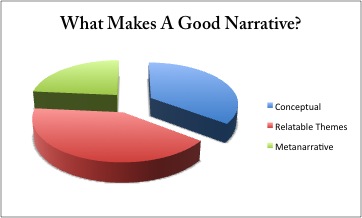
What makes a good narrative?
- conceptual/experimental
- relatable themes
- metanarrative

Is star image important to convey in music videos?


As a result of the multiple choice layout for some of the questions, the results provided me with quantitative findings which were easy to collate into an ordered format. The open questions offered me rich data in a qualitative format, giving a deeper insight into what I should include in my music video and most importantly, what genre I should choose.

Following this, a focus group allowed me to gather further primary research, however more directed towards my own work.  I had already conducted enough research prior to this, to develop a few ideas to pitch to the group. I found that people suggested a studio performance, as opposed to narrative would work best for the band and song that I have selected.
I would have preferred to present the song to the group, so that I could get more directed feedback, however the band were still in the process of choosing a song.

Once the band had sent me the chosen track and a rough idea of what they wanted the video to entail, I began researching accordingly. The band had decided to contradict the style of their music by having the visuals represent a 1950's style setting. I analysed "Buddy Holly" - Weezer and "In Bloom" - Nirvana. I found that common features in both these sequences, like the monochrome and static effects, manifested an authentic feel of the time period they were set in.
As Goodwin would suggest, visuals of this manner contradict the music. As well as opposing the conventional preconception of star image in relation to an alternative rock band. 

Monday, 4 April 2016

Music Video - Contextual Research

Carol Vernallis - 'The Kindest Cut: functions and meanings of music video editing'

Vernallis suggests that music videos rarely follow the coherent and ordered structure of continuity editing, which most other forms of film adhere to. Perhaps this is a result of wanting to make the video somewhat memorable in its design, as opposed to following a chronological order of events, as a majority of films do. A master shot, or base track is often used, specifically if there is a performance sequence involved, this provides a foundation for structure. The camera usually moves in time to the music and there is greater freedom between the transitions of shots, following no conventional order and sometimes jump cuts are used, to speed up events, seeing as most music videos only last between 2 - 4 minutes."Music video's disjunctive editing keeps us within the ever-changing surface of the song" (VERNALLIS, 2001).

Such discontinuity allows the viewer to focus on other elements of the production, such as the music, which is just as - if not more - significant than the video itself. Whereas it is common for Hollywood film style continuity to draw the observer into the narrative. Here we see that action is rarely concluded and a narrative is simply implied, as opposed to being fully explained. "Visual hooks create continuity. Non continous shots linked by a singe feature unified by figure, shape, colour and settings."

The types of camera movements, edits and other visual elements which are used to enhance the music itself include; extreme high/low angle shots, extended tracking shots, unconventional tilts, pans and zooms. Close ups are used as a focus point, as sometimes the movement of shots is too rapid to follow and develop an understanding from.

Vernallis also suggests that the singer will most likely be positioned at the focal point of the frame and that when an artist makes eye contact with the camera, breaking the fourth wall, they are no longer simply viewed as an object.

Editing in music video, can serve different functions and often shifts purpose throughout a single production. The most common examples include; enhancing the structure and pace of the audio, reflecting star image, illustrating the lyrical content, or simply creating aesthetic appeal. “Music videos break down visual, lyrical and musical elements to the smallest constituent parts – a prop, a colour, a gesture, a few words, an intriguing riff” (VERNALLIS, 2001).

In music video, it is very often the case that what we hear influences the way we perceive the images presented to us, however what draws our focus in a visual sense will determine how we hear the music, so it works both ways. The visual and aural elements should be used in harmony, in order to form a striking and memorable music video.

References:
VERNALLIS, 2001. The Kindest Cut: functions and meanings of music video editing. Oxford Press

Music Video - Analysis of Text


The video presents a combination of the genre styles; studio performance and conceptual/experimental. The two have a specific visual style which allows them to correspond fluidly into one sequence.


The performance acts as a way of illustrating the music, whilst the conceptual elements amplify it. In addition to this, the edit has been done in such a way that each cut reflects the pace of the composition. In some instances, the lyrics are visually represented in quite a literal way; on the line 'sucked into the supermassive [black hole]' there is a shot which zooms into a black hole. Not only does this illustrate the lyrics, it also amplifies the music, as the camera movement is displayed in time to the composition.


Conceptually, the warped identities of the band and the actors, mirrors the ambiguity of the lyrics, which allows the viewer to develop their own interpretation of events. This is added to by the fact that the video, directed by Floria Sigismondi, shows a certain for influence from the 1943 production "Meshes of the Afternoon". With the reference to the mirror faced figures, there is a sense of elusive identity.


In terms of mise en scene, lighting and colour has been used to influence the mood and ambience of the video, ultimately illustrating both the music and lyrics. 
The colour red is used numerous times, perhaps to indicate the intimate essence of the lyrical content and manifest this in a visual form. It also connotes towards the lyric 'you set my soul alight', as the colour holds a relation to fire. 


There is a sense of voyeurism used, however its seems to form part of the narrative. It is presented in such instances where a male-like figure observes a female equivalent through a pair of binoculars. This appears to be a theme throughout the video; the constant observations between characters, insinuates a provocative undertone. This also presents predator like connotations, particularly enhanced by the close up of the owl eye.


There is a recognisable awareness of artistic style throughout the video, which is highlighted by technical aspects such as close ups and other various camera movements. The band are all presented in a similar way; mise en scen costume, there is a certain casual elegance in the attire of the band members adding immeasurable amounts to the concept, bringing to light the soul of the song.


Thursday, 17 March 2016

Music Video - Analysis of Text


One of the most striking aspects of the video, is the way visuals have been edited to cut in time to the audio track, 'preserving the videos momentum' (VERNALLIS, C. 2001). It works be amplifying the music itself which highlights the instrumentation of the piece.

In addition to this, the diverse visual elements illustrate and amplify the lyrical content of the song. An obvious example would be the lyrics that manifest in various ways, in a written form.


A sense of artistic branding is highlighted through the performance that the artist delivers during the course of the video; a simplistic yet intensely sincere presentation is reflective of the artists style.


It would seem that the genre of the video is predominantly studio performance, however the way that the lyrical content has been portrayed through the use of written indicators and manipulation of inanimate objects, there is a slight narrative that is developed.

The overall feel of the video is expressed through the various visual elements, enhancing the musical side of things. The location itself is sets a personal and familiar ambience, once again this is a device used to express artistic branding. It gives an insight into the artist style, both visual and musical elements.

References:
VERNALLIS, C. 2001 "The Kindest Cut: functions and meanings of music video editing".

Tuesday, 15 March 2016

Music Video - Analysis of Text


The use of close ups to introduce the video, acts as an expressive device, getting across artistic portrayal. This alludes towards star iconography and branding, presenting the very distinctive image of the artist herself.

In addition, a sense of voyeurism is introduced as the viewers are given the opportunity to observe the artist from a rather intimate distance. This is reinforced as the video progresses, where we see the artist clothed in revealing attire. The overall style of the video reflects some from of meta narrative, which is enhanced through the choreography. It is suggestive of her mixed creative abilities and visual style, which ultimately structures some sort of hyperreality.  As displayed below, her album artwork is a representation of herself, composed in such a way that the observer is forced to question its legibility. However, her most distinctive traits are easily recognisable, particularly the hair and makeup.


The lyrics are amplified and illustrated in various instances; not only does the video feature the artist delivering a very sincere performance of the song, which increases the authenticity, we also see that a theme of isolation is referred to, which is complimented by a long shot of the artist in solitude.


Similarly, the music is amplified by what's on screen; throughout the video the visuals enhance the pace of the audio, producing creative harmony. From a technical perspective, it is clear to see that the shots have been cut in time to the music, as well as being filmed in such a way that the musical elements are highlighted. An example of this is the rotation of the camera, which particularly amplifies the vocals and central melody. 


As Goodwin would suggest, the genre of this music video is a studio performance combined with experimental and conceptual elements. Again, this stands a reflection of the artist and brings to light her star image.


Thursday, 10 March 2016

Music Video - Contextual Research

Andrew Goodwin - Dancing In The Distraction Factory

In an overview of his analysis, it can be said that the most significant ideas that Goodwin proposed suggest that there is a direct relationship between lyrics/music and visuals; the visuals presented may either illustrate, amplify or contradict the music and/or lyrics. Also, it is often the case that we see how the visuals are cut in time to the audio.


In addition to this, Goodwin also highlighted the genre characteristics of music videos, which include: stadium performances, studio performances, location, narrative and conceptual/experimental. No genre of music is distinctly defined by a style of video, however there are key visual indicators and themes that are identifiable. A popular feature is close ups of the artists, often this is implemented as a demand from record companies to feature the artist heavily in the video. Some artists will use this to develop motifs, which occur across multiple videos; artistic branding, celebrity culture, artistic portrayal and implications on looking good. Similarly, star iconography is something that artists tend to develop in their music videos through branding, style, brand values or unique selling points.


There are also many examples of voyeurism used in various music videos in the form of nudity/revealing clothes, exhibitionism, intimate settings and frame within a frame. In this context, the male gaze is often used to attract a male audience, typically achieved by focusing upon a voyeuristic perception towards and an objectification of women. The emphasis of looking is also reinforced by having the artist look directly into the camera.

Finally, Goodwin noted that music videos often incorporate intertextuality, by referencing other music videos, films, or television programs.


References:
GOODWIN, A. (1992) "Dancing In The Distraction Factory". Minneapolis: University of Minnesota Press 

Wednesday, 14 October 2015

Music Video - Analysis Of Text


Although the layout of the video is relatively simple, as the layout remains the same in a studio performance set up, the overall edit effectively represents the feel of the music and the most striking aspect is the pace. Each shot is introduced in time to the audio, creating harmony between the audio, visual and lyrical elements.


Mise en scene costume, the red attire of the band is indicative towards the conceptual aspect; as red presents connotations of passion, the very choice of costume reinforces an expression of
their emotion and zeal towards music itself, contradicting the lyrical content; 'ban all the music'.
This also adds to the band identity, which is further enhanced by the fact that each band member is dressed in a similar manner, however they each have a distinctive style that reflects them on a more personal level.

The exposition of the sequence is built up by the gradual zoom, directed towards the singer. This draws the viewer in and alludes to
leads to the chorus in which the shots become much shorter, reflecting the pace of the audio.


A significant visual feature within the chorus section, are the concise pans that portray the tempo accurately, adding dynamic appeal with the swiftness of movement. They are also reinforced by the use of close ups, which utilise a shallow depth of field, directing the audience precisely towards the subject of focus and successfully holding their attention. This technique not only works in a visual sense, however it underpins the rhythm of the song. As Goodwin suggests these close ups are an expression of artistic portrayal, emphasising the band image and the overall performance.


As the intensity of the song increases, not only do the shots becomes quicker, the lighting also becomes more explicit. The transitions consist of flashing, which highlights the havoc that is occurring, creating a tense atmosphere and a vision of ambiguity.


This is complimented by the inversion of colour, which again alludes towards the unconventional happenings. By incorporating the use of handheld shots showing various angles and perspectives, the impact of the video becomes stronger and suggests a sense of unease.


The slow motion section of the sequence, visually represents the instrumental interval of the track and acts as a build up to the final chorus. In spite of the reduced pace of the shots, vigour is still maximised, which demonstrates that slower shots are just as effective as those that are faster, it simply depends on how they are utilised.

The overall editing has been conducted in such a way that the music is visually manifested in the video. Shots have been sharply merged to portray the rapidity of the audio, causing a significantly memorable montage of sequences. A distinct example of this appears in the final chorus, where the shattering of glass is featured on the first hit of the snare in that section.


The production, is an example of just how visual and audio are equally paramount factors in creating an effective piece of media when used well in correspondence.